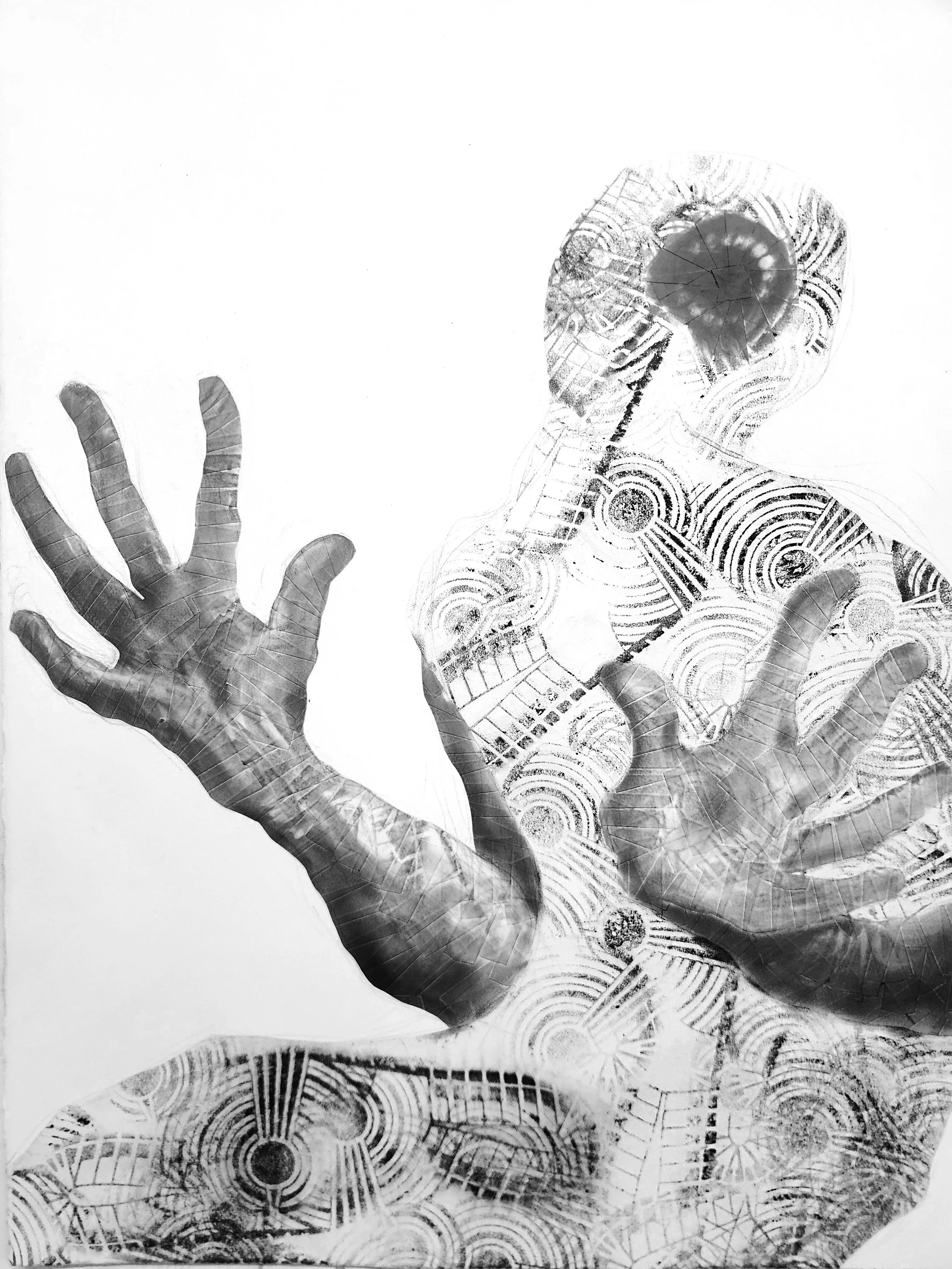
Sous la botte, sous la soie - Under the boot, under the silk
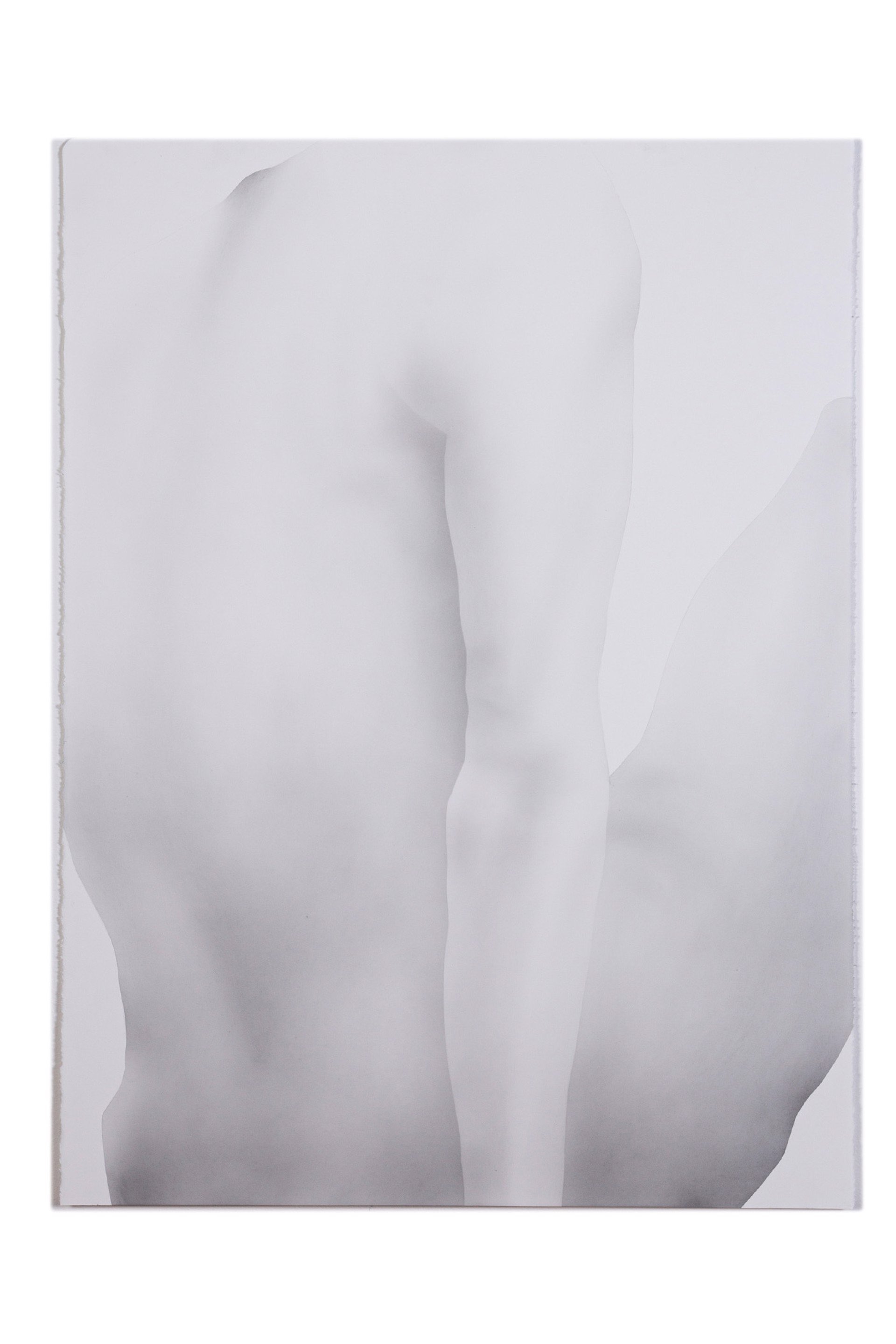
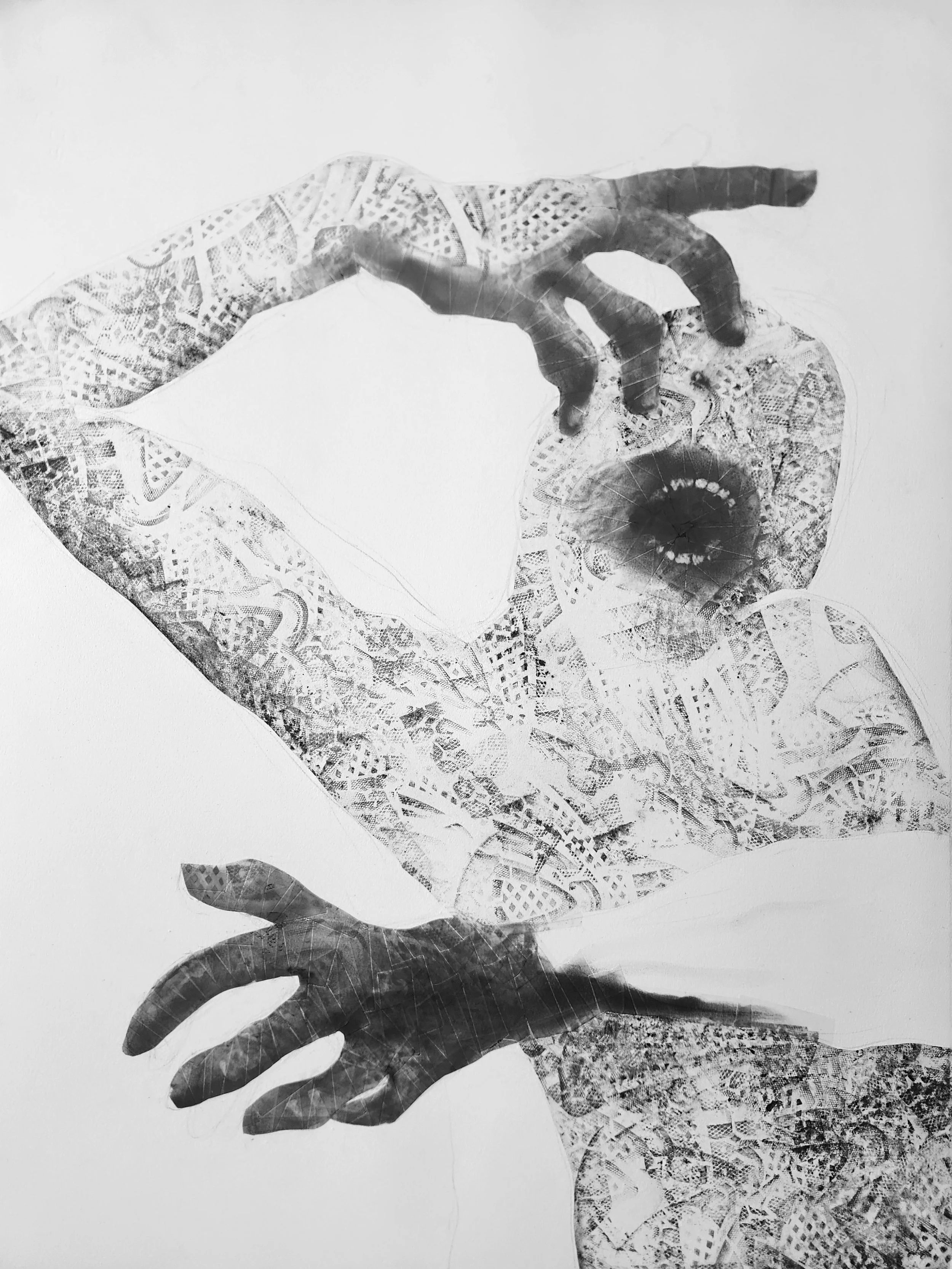
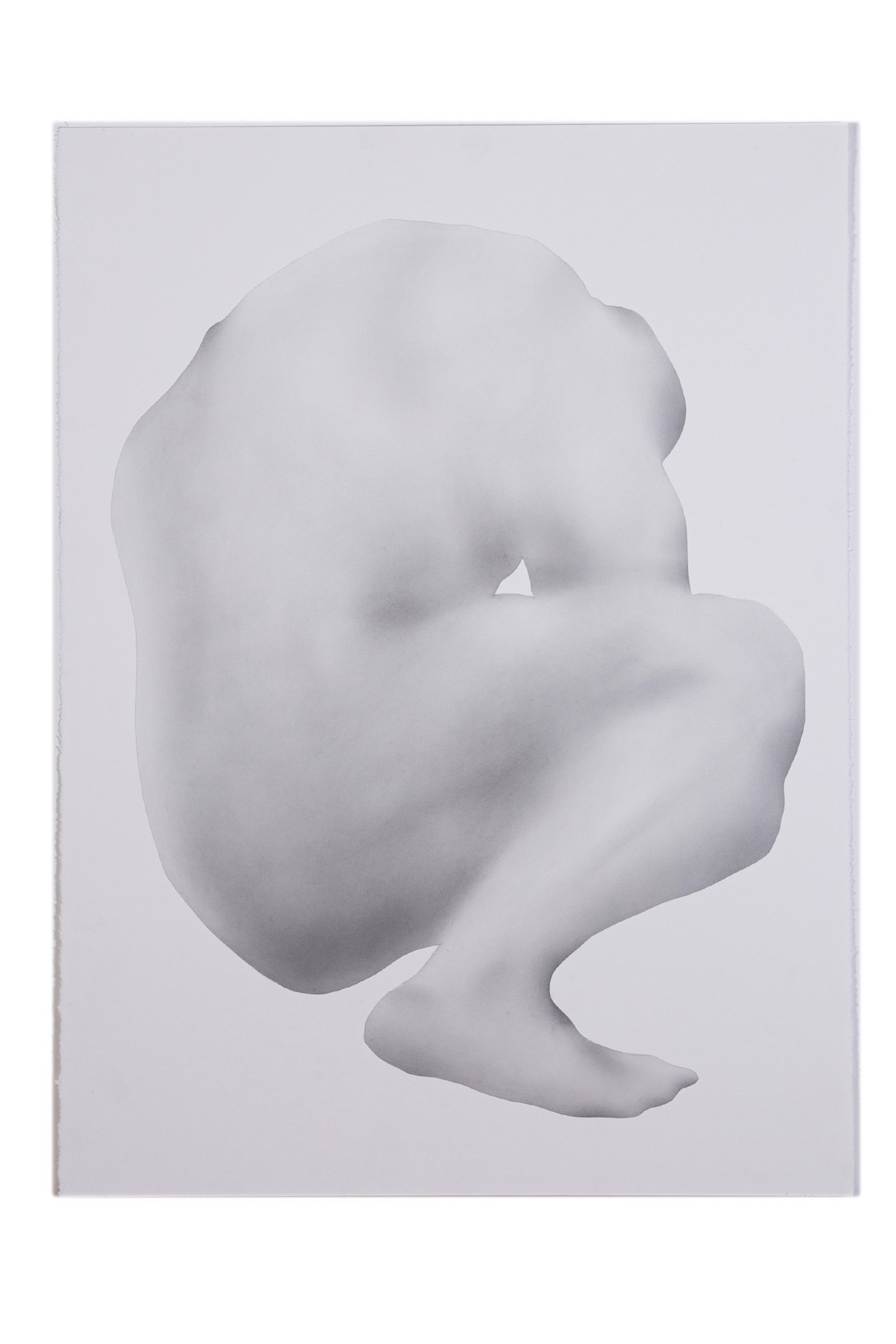
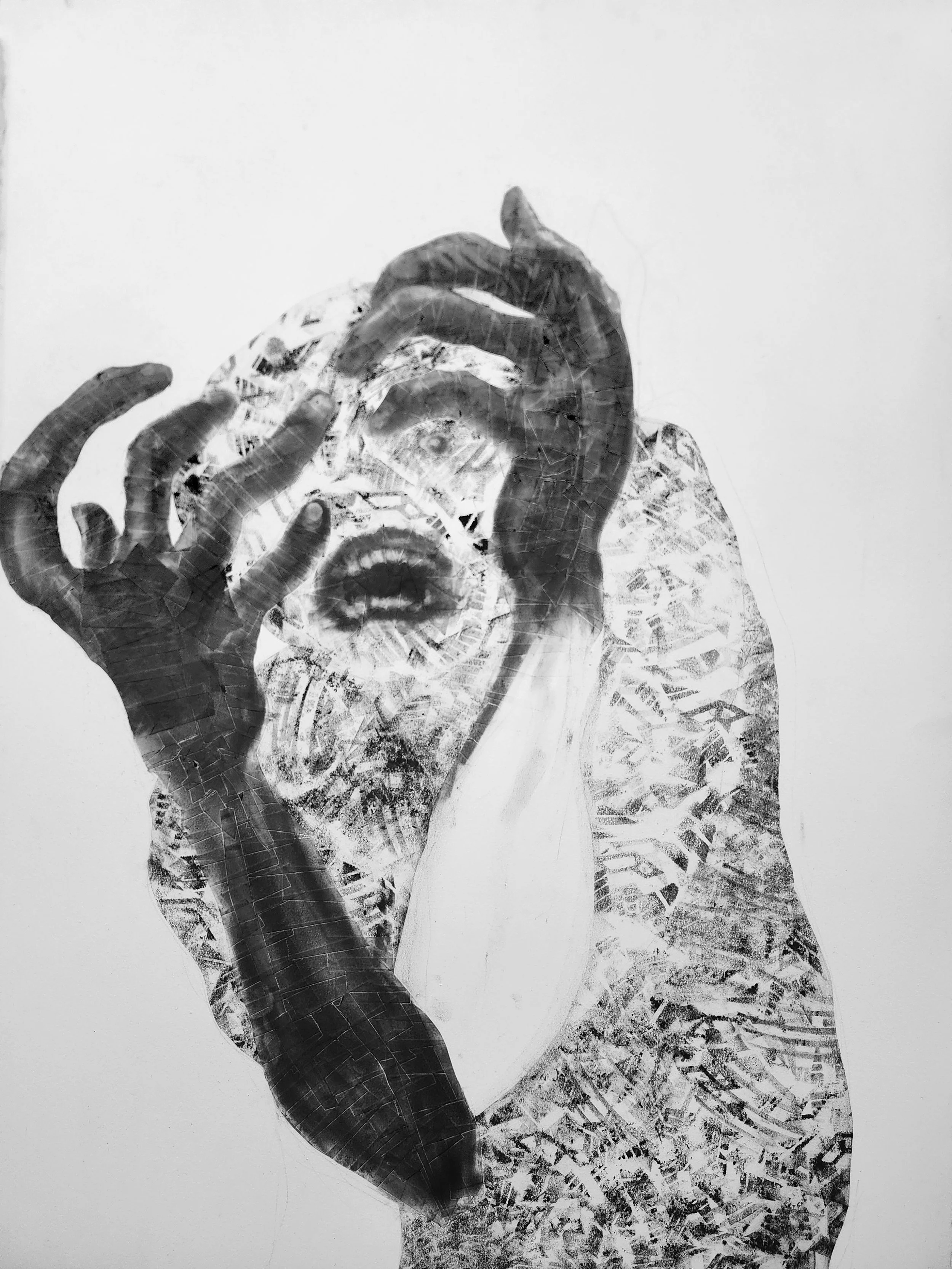
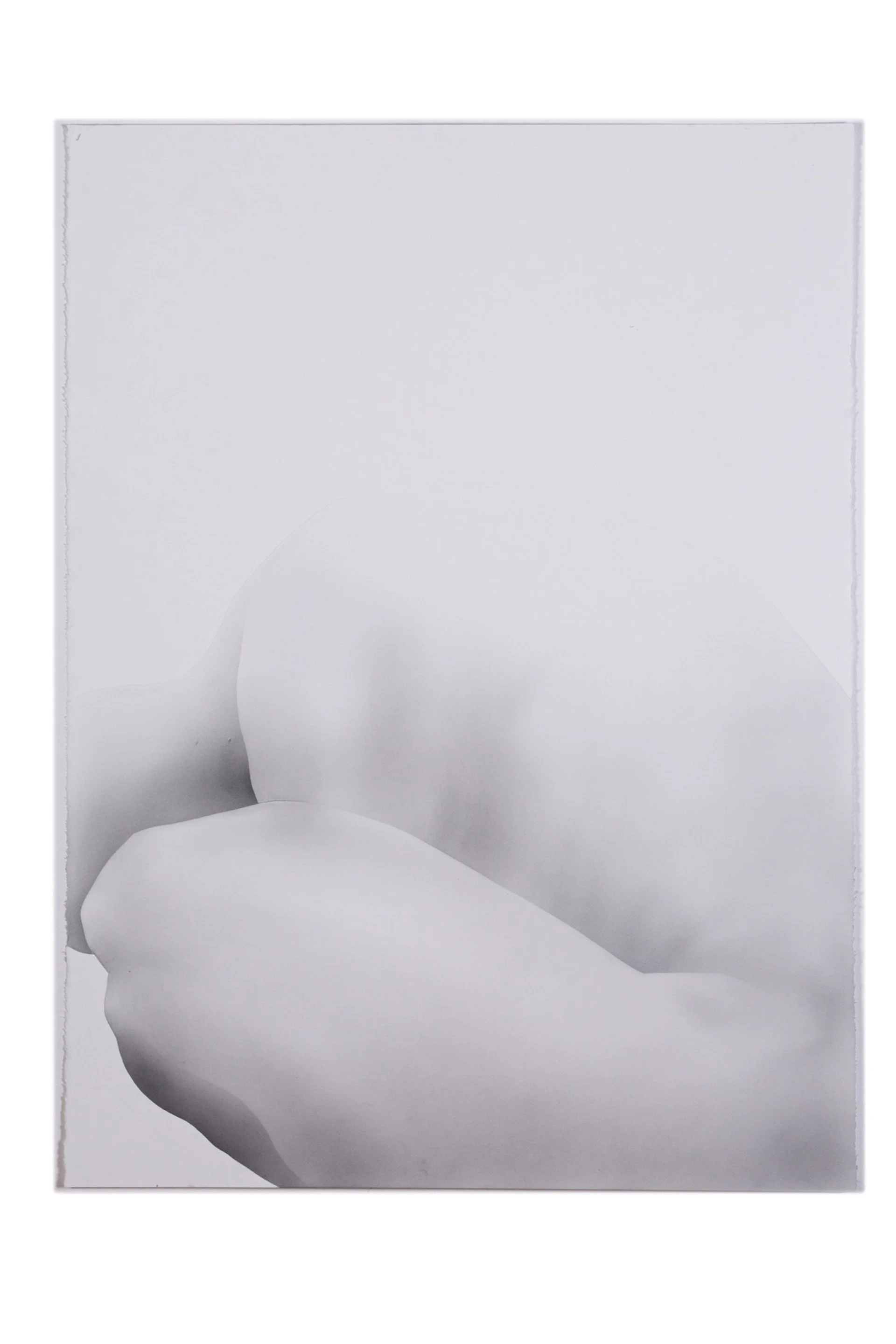
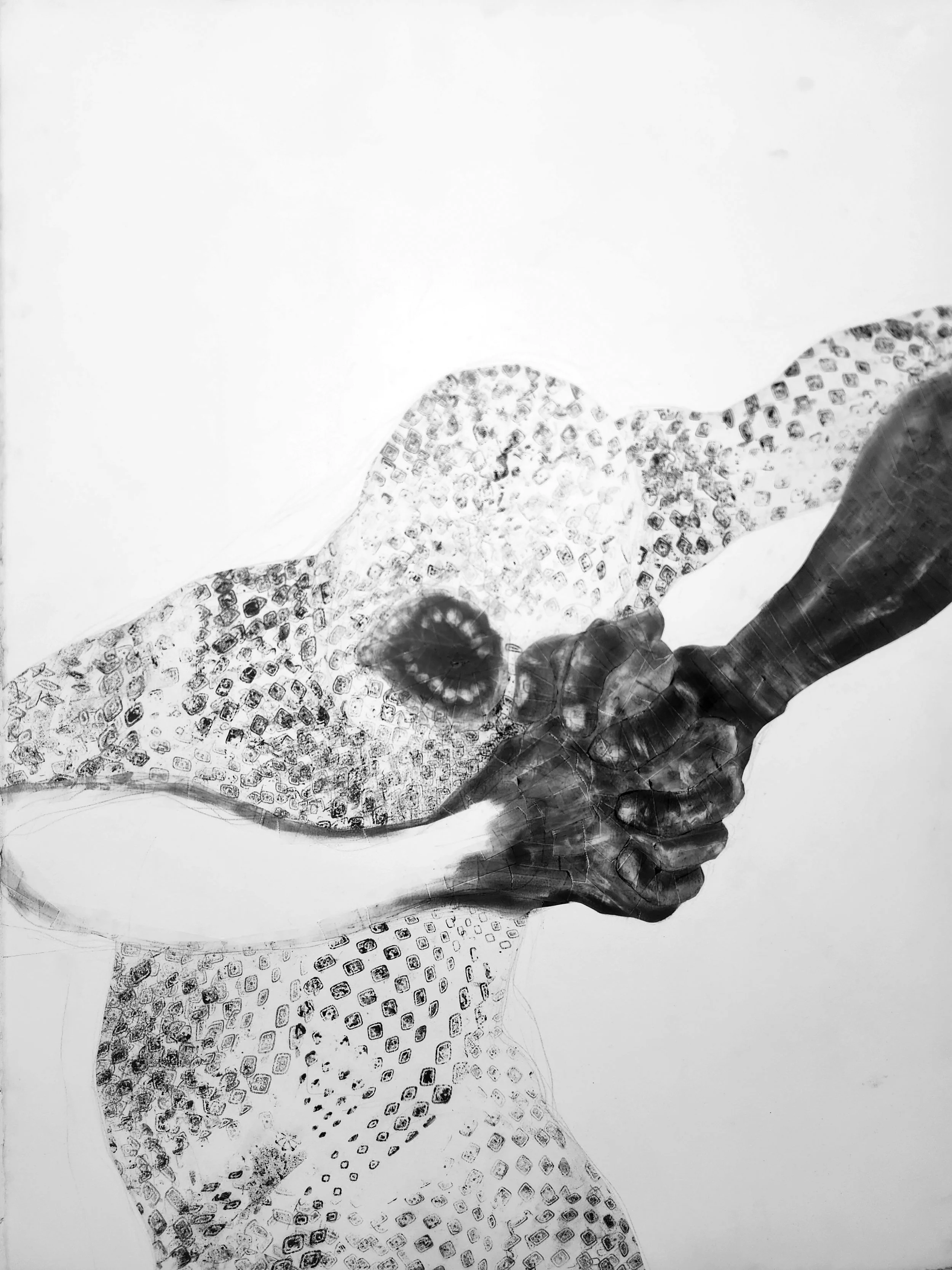
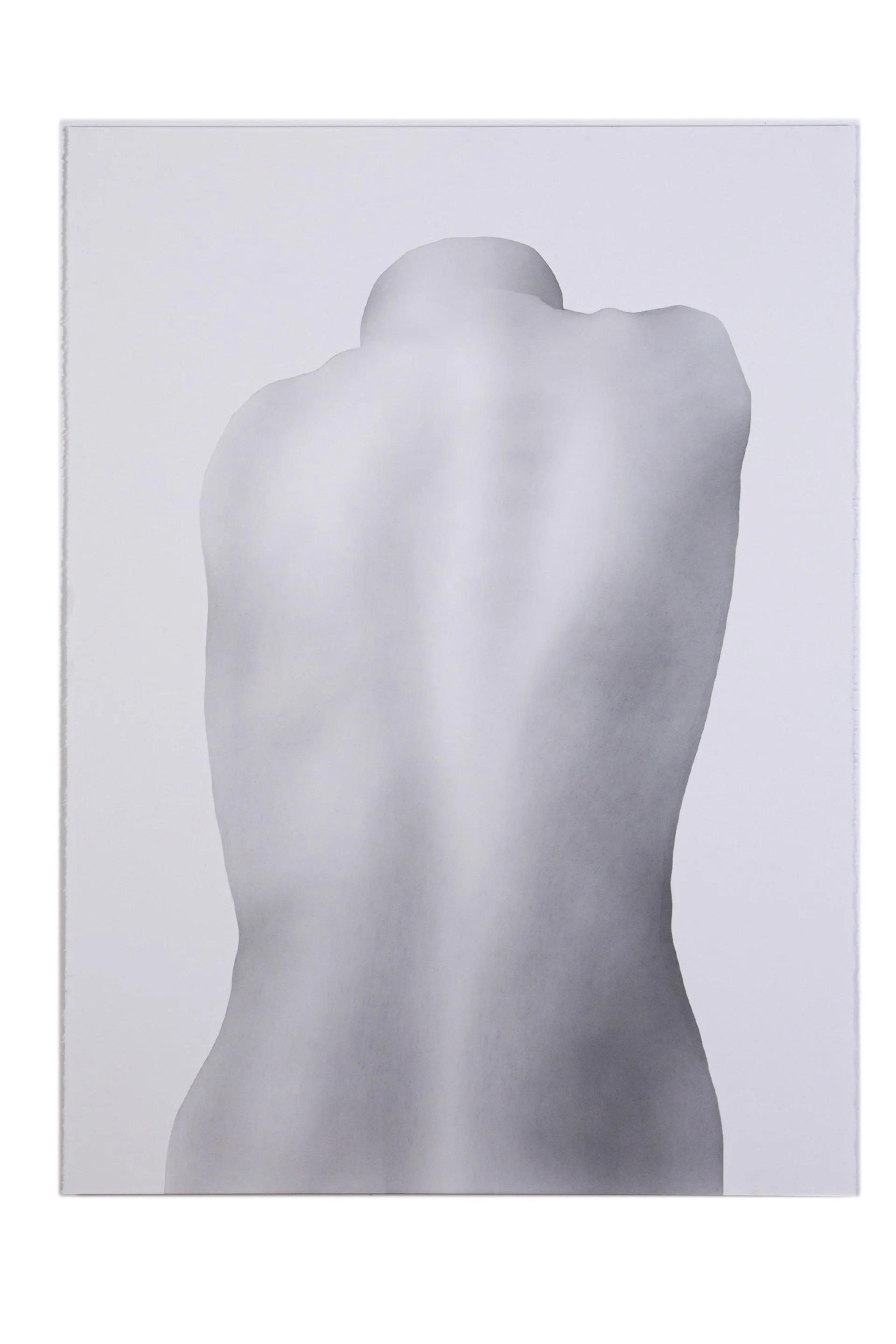
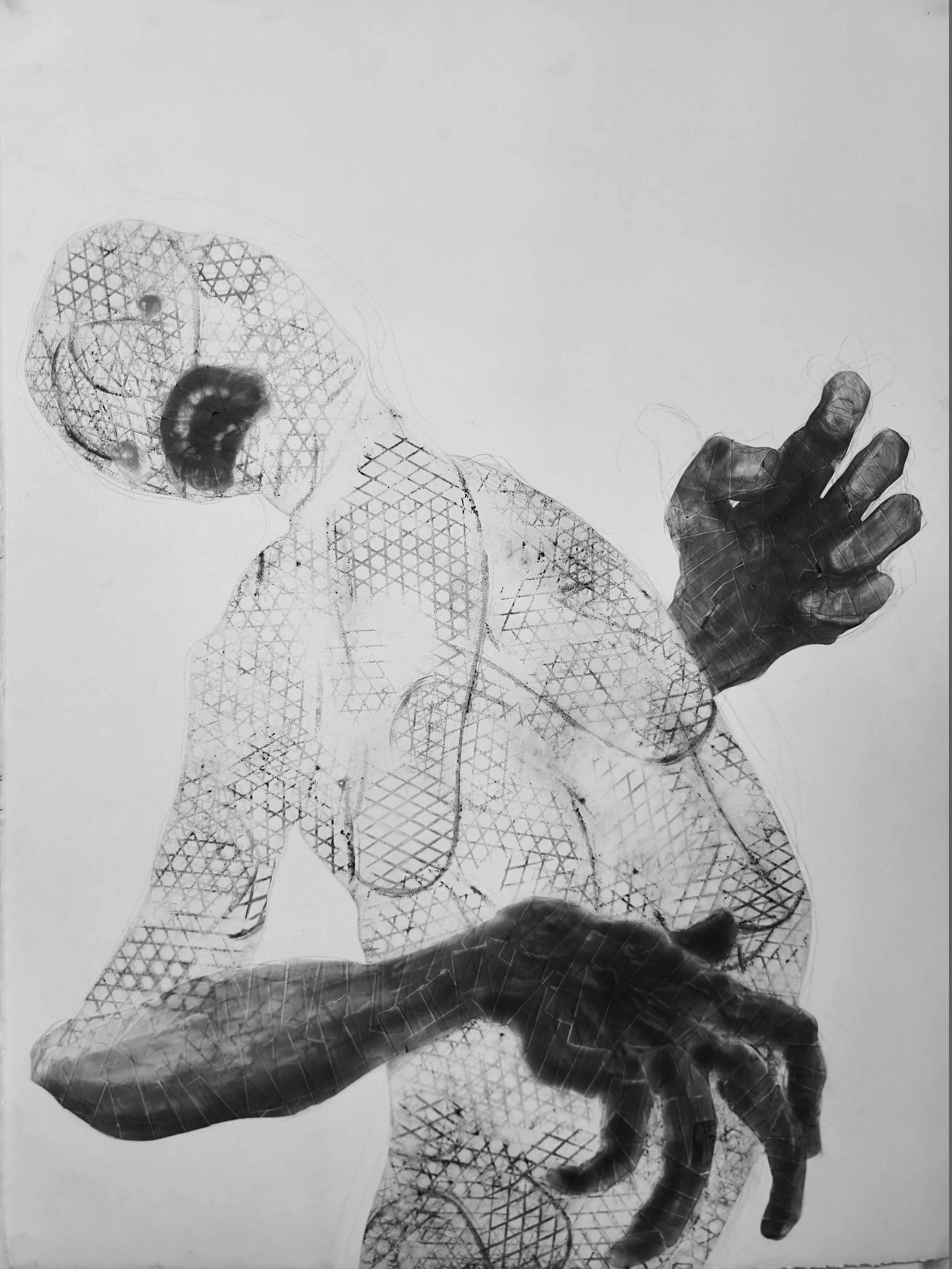
2025. Graphite et ruban adhésif sur papier. 22’’x 30’’ (56 cm x 76 cm)
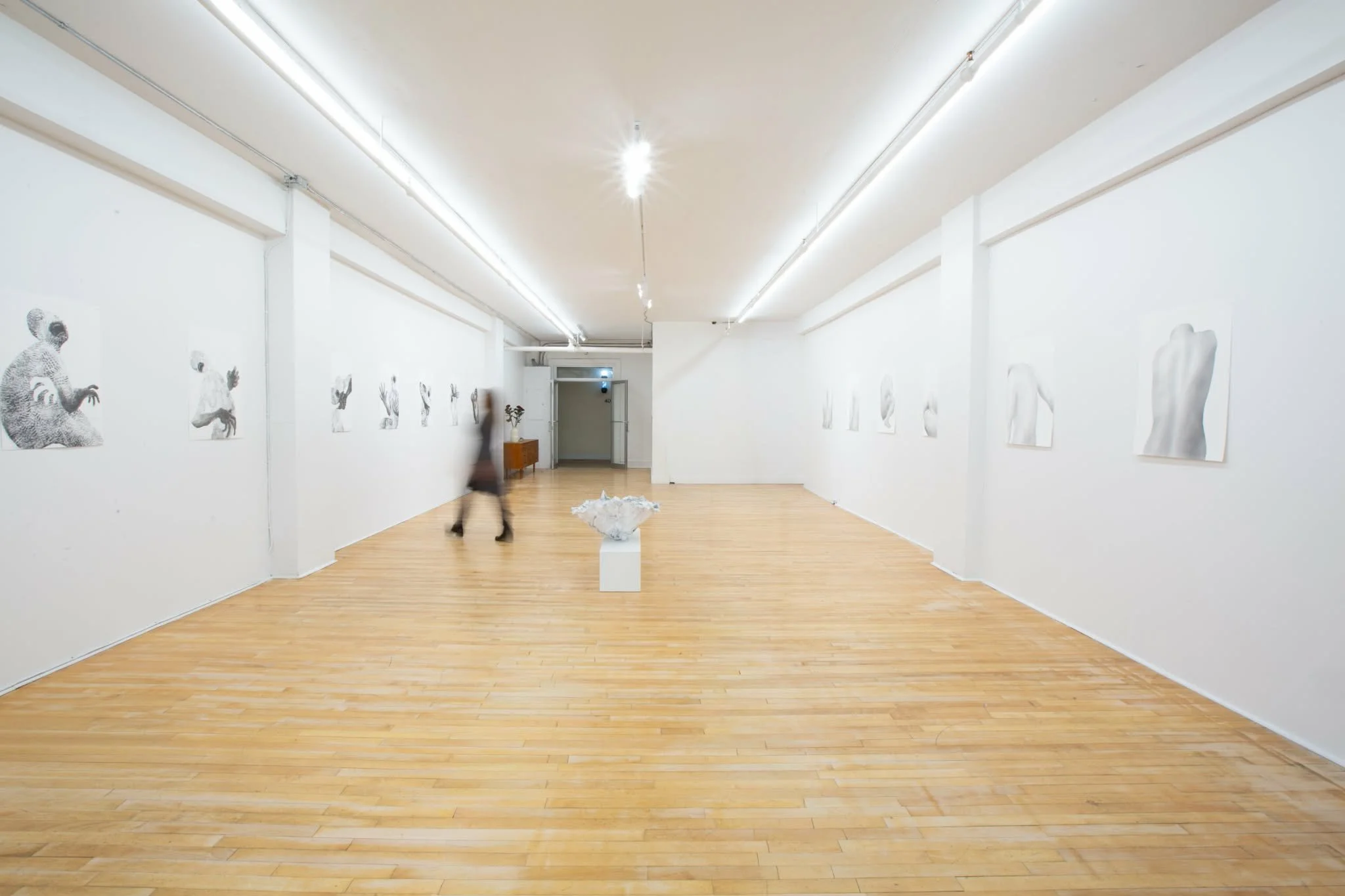
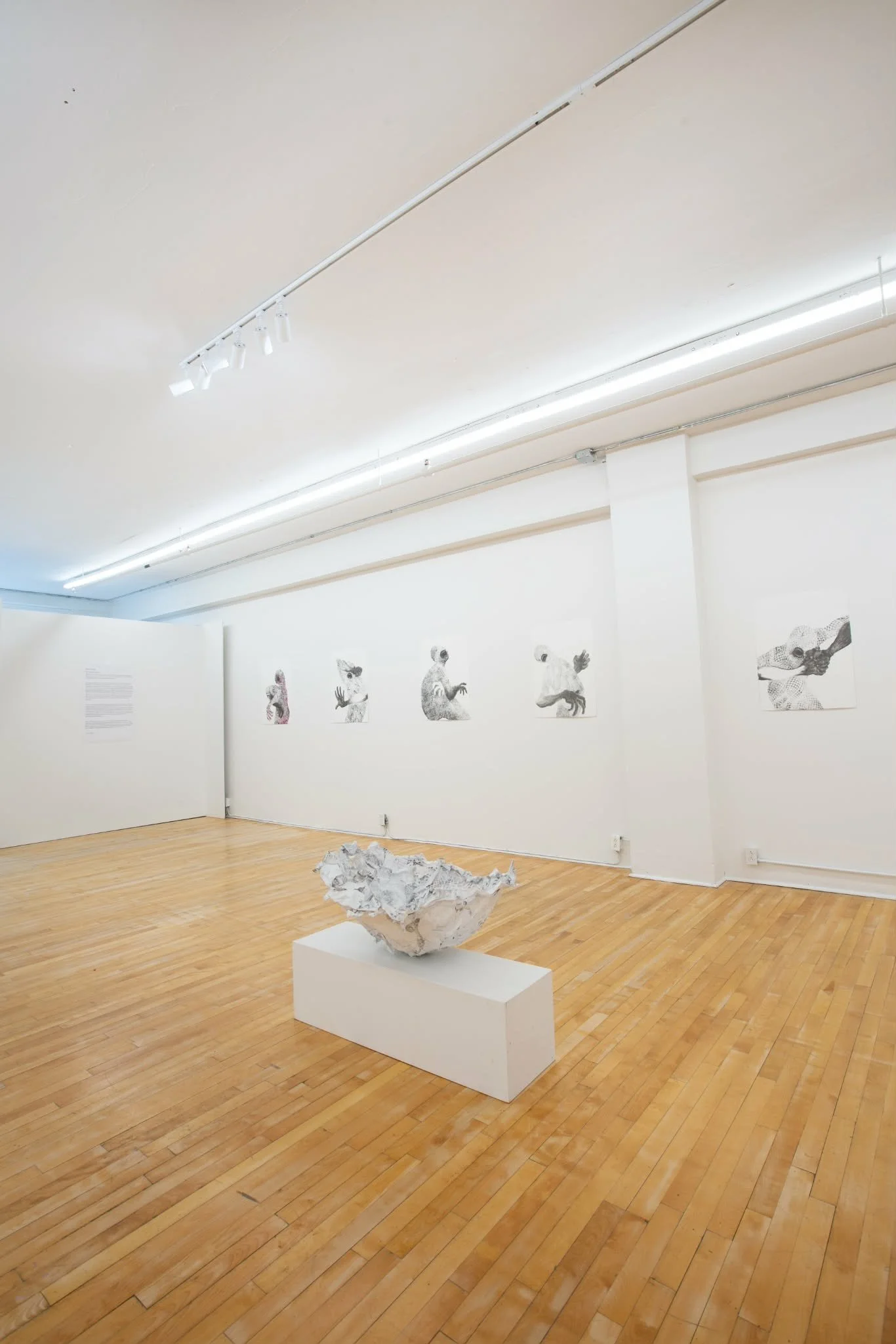
Les séries « Sous la botte » et « Sous la soie » s’articulent comme deux pôles d’une même recherche autour du corps, envisagé à la fois comme espace de vulnérabilité et comme lieu de tension, de contrainte et de résistance. Ensemble, elles mettent en dialogue des états opposés, douceur et violence, abandon et oppression, tout en interrogeant la manière dont ces forces s’inscrivent dans la matière même du dessin.
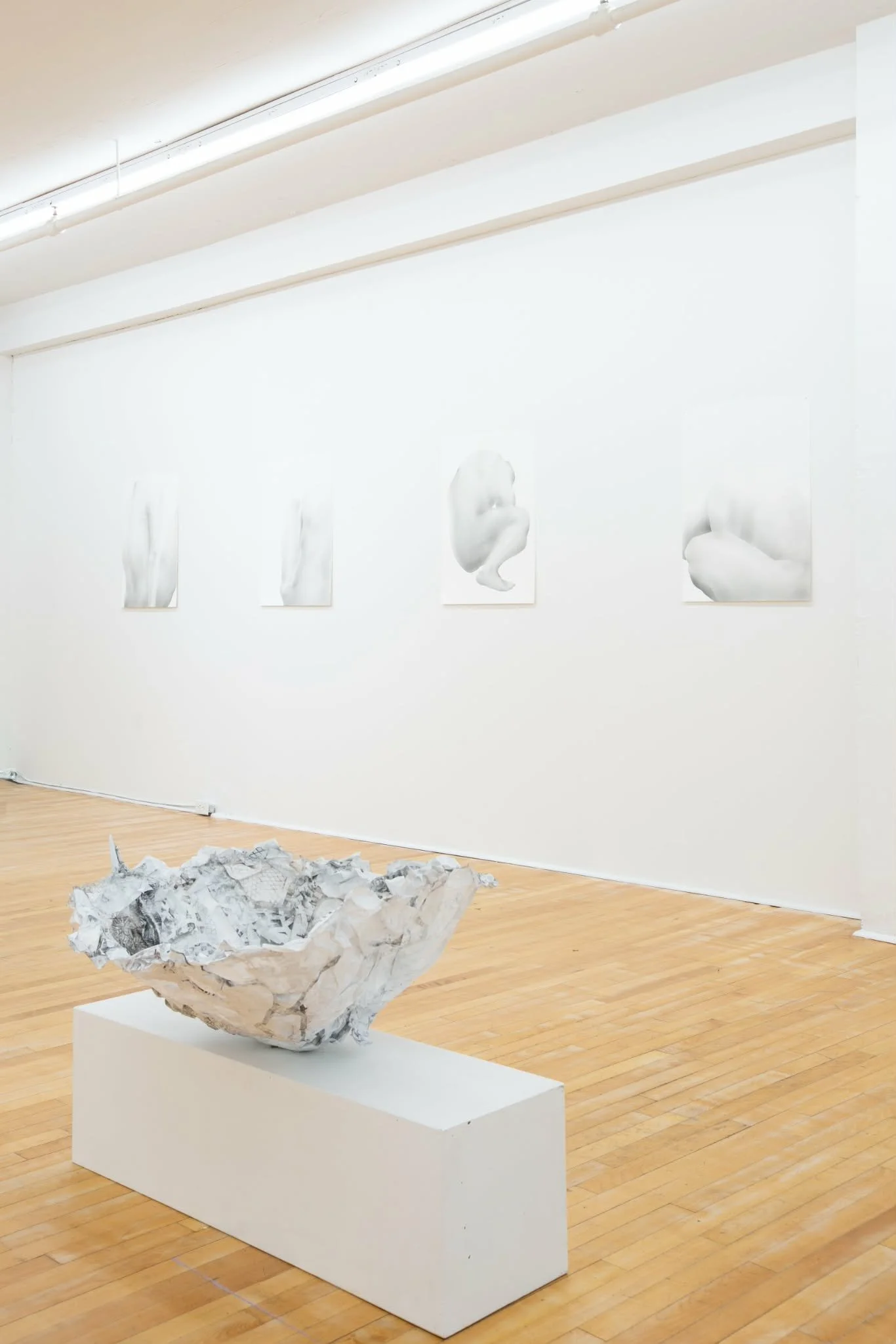
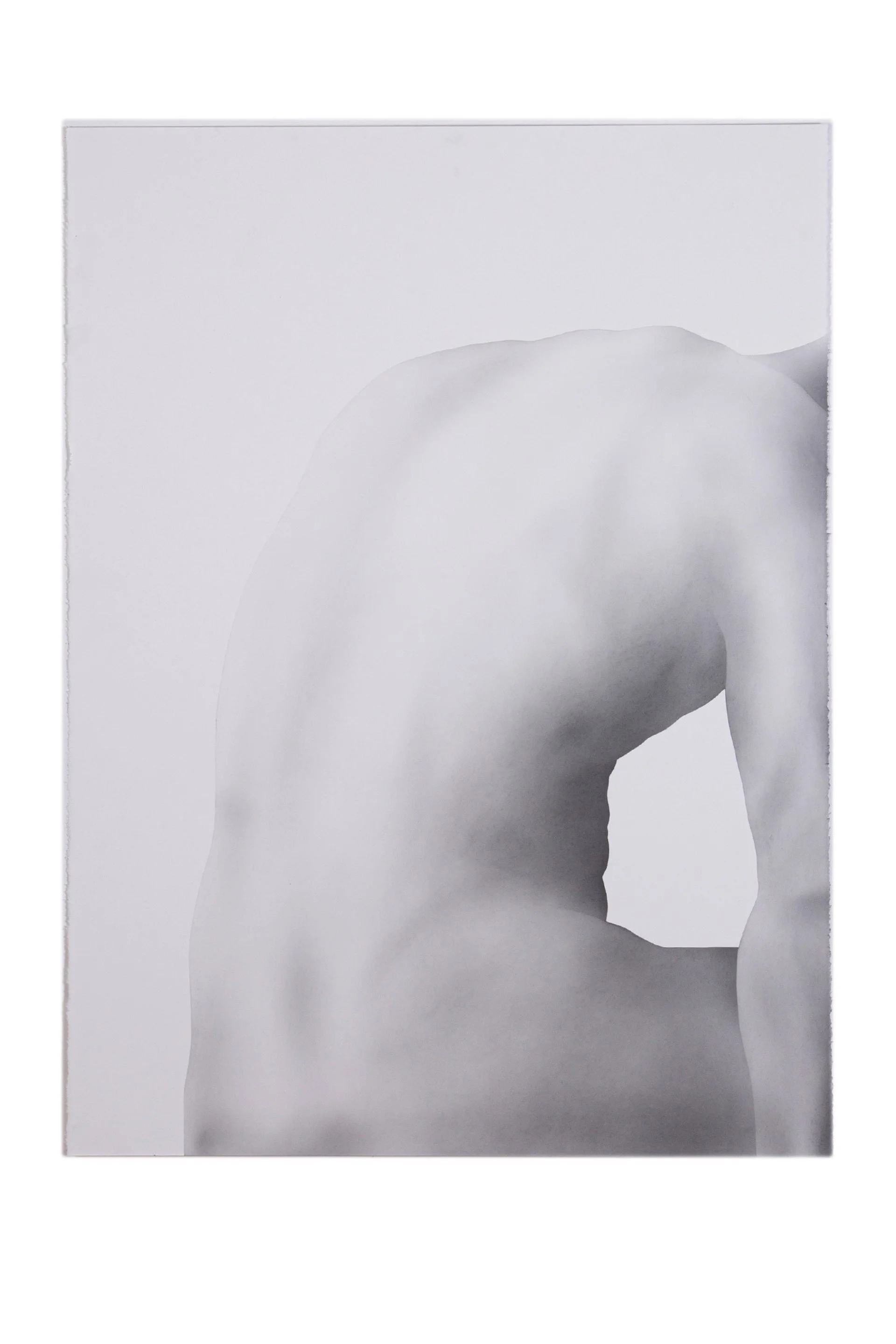
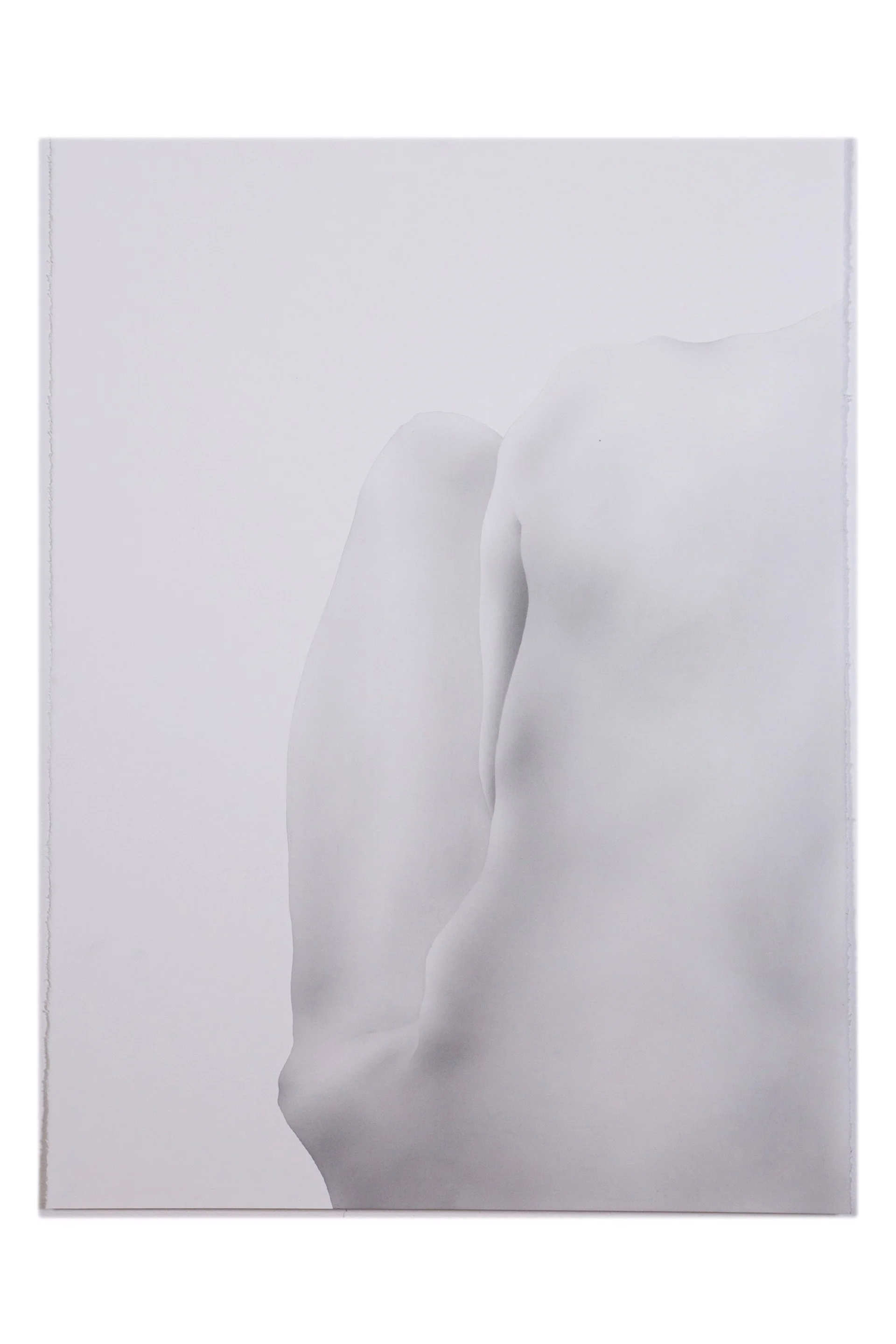
Dans « Sous la soie », le geste est lent, attentif, presque imperceptible. Réalisés à la poudre de graphite appliquée au pinceau de maquillage aux soies extrêmement douces, les dessins explorent une approche tactile et délicate de la surface. Le graphite se dépose en fines strates, créant des passages subtils entre ombre et lumière. Les zones du corps représentées, dos, nuque, flancs, évoquent une vulnérabilité silencieuse. L’absence de visages et de mains, ainsi que le caractère non genré des corps, suspend toute narration et ouvre un espace de projection, où le regard devient presque une forme de toucher.
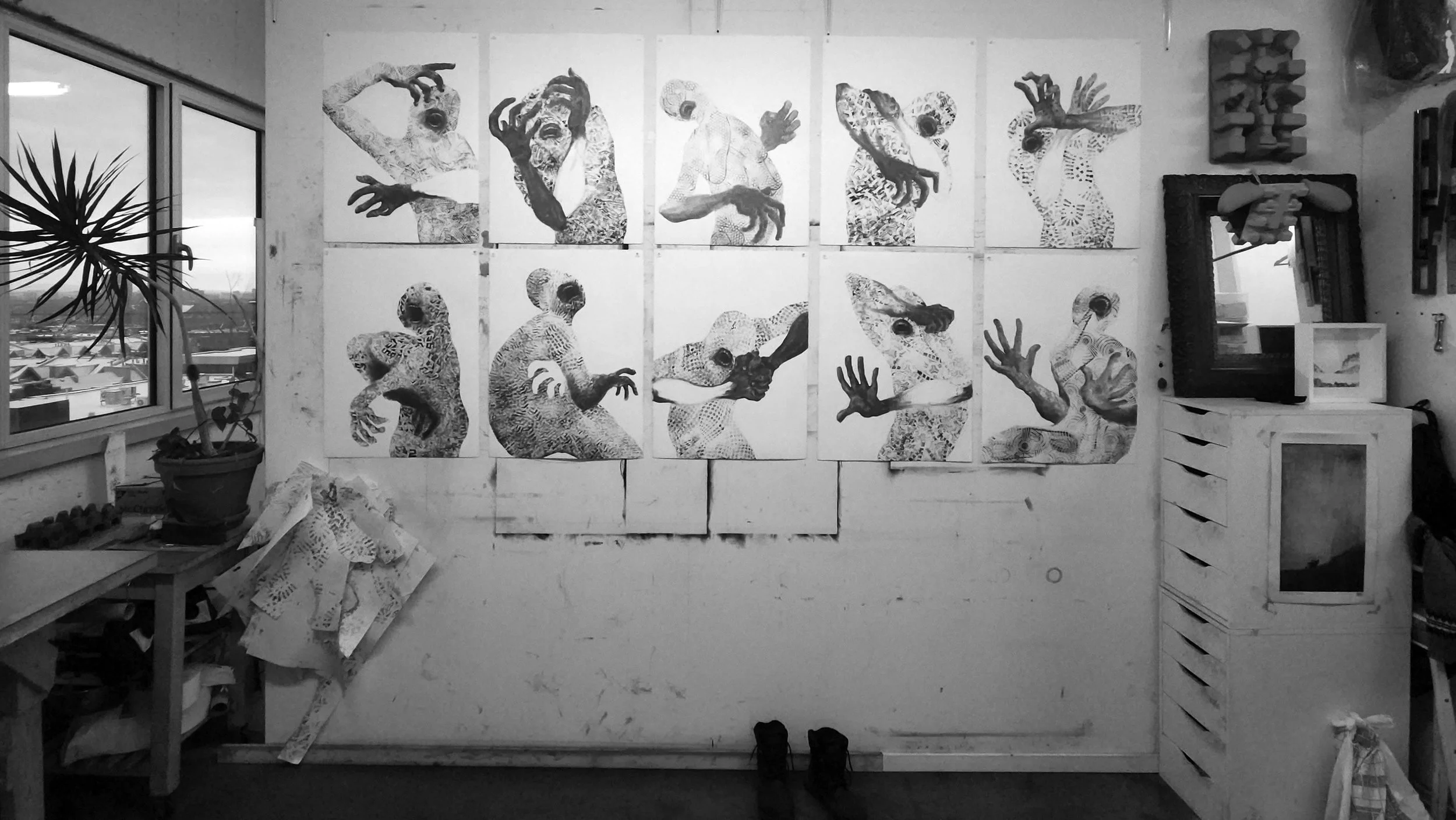
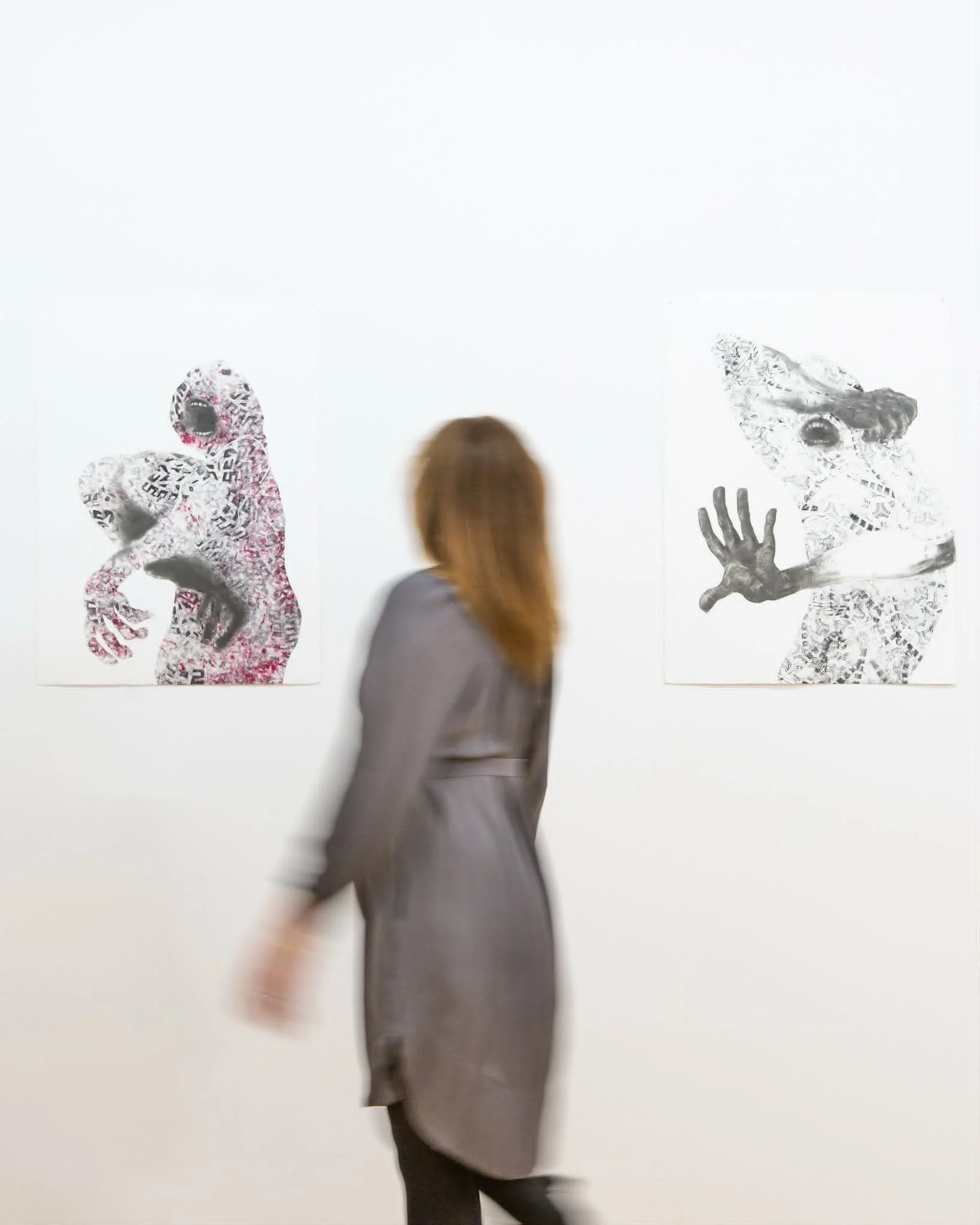
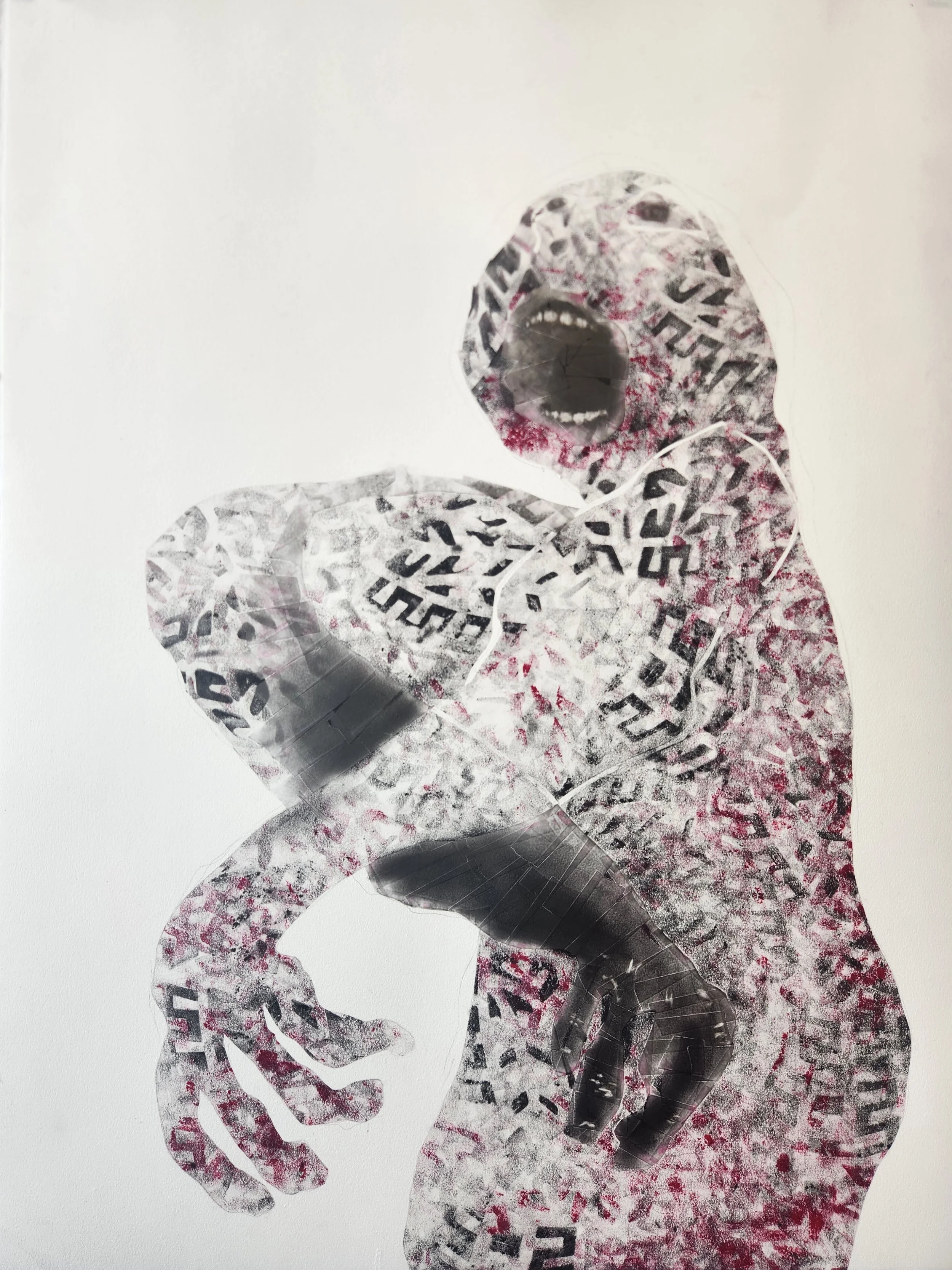
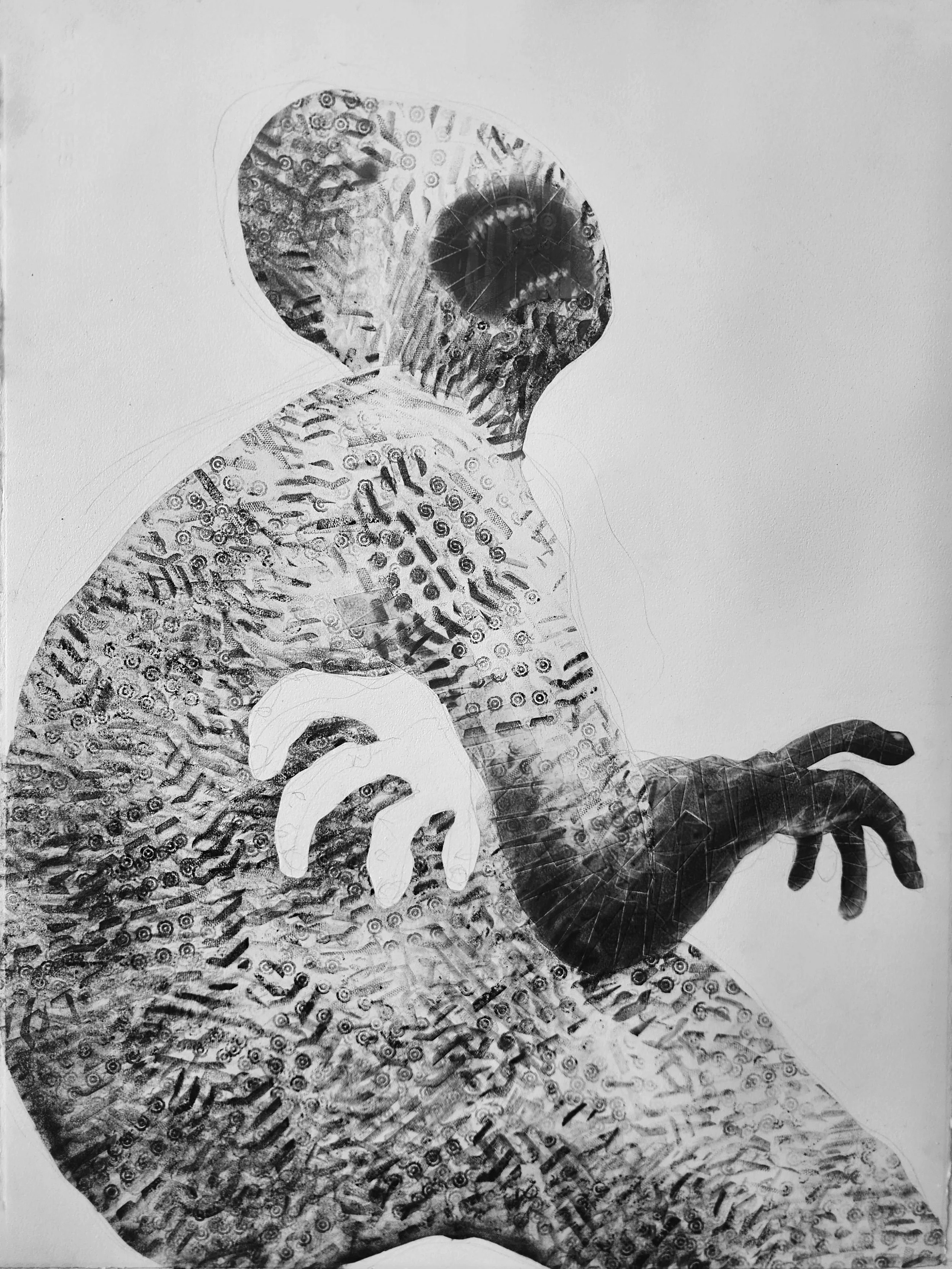
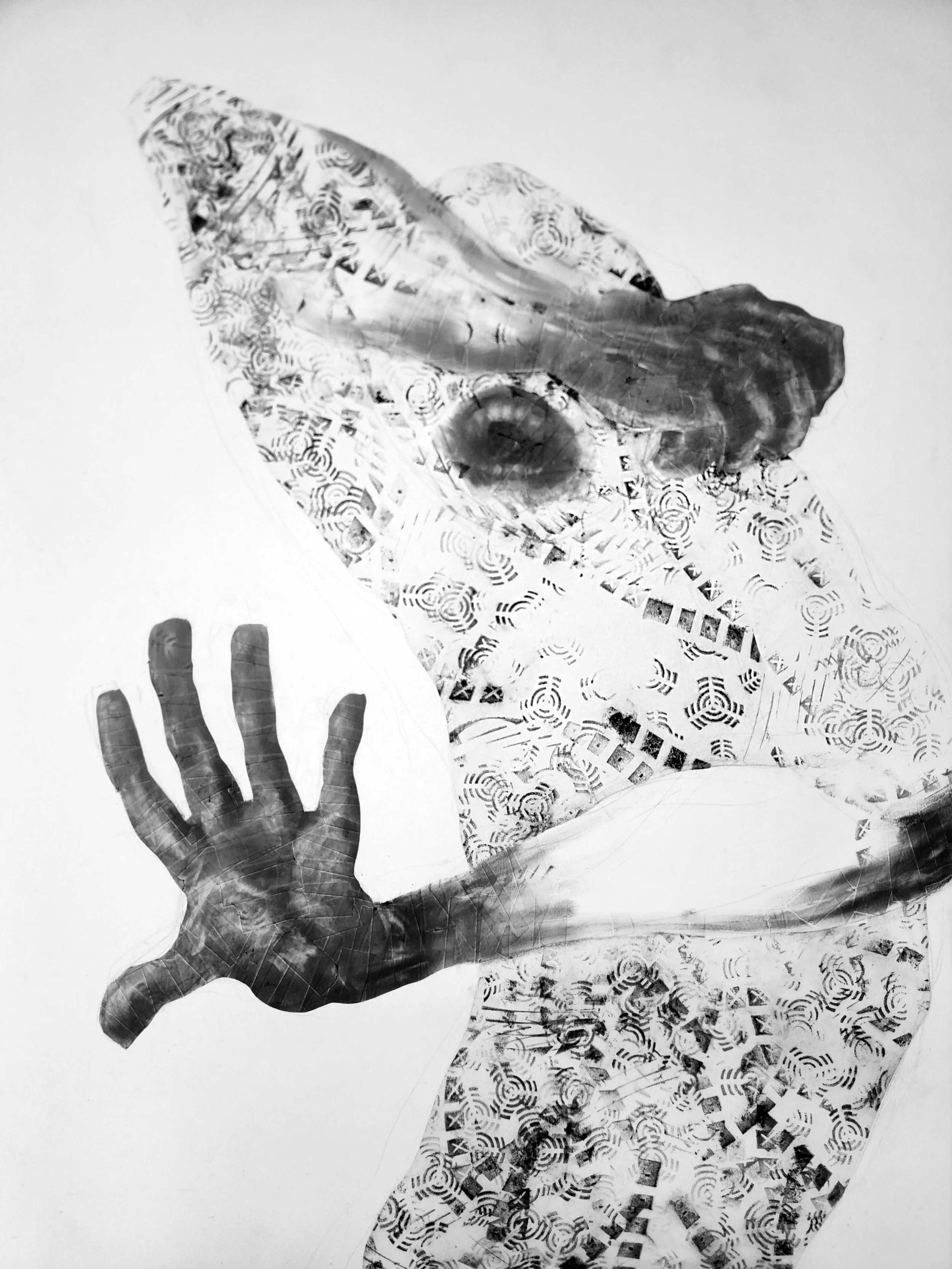
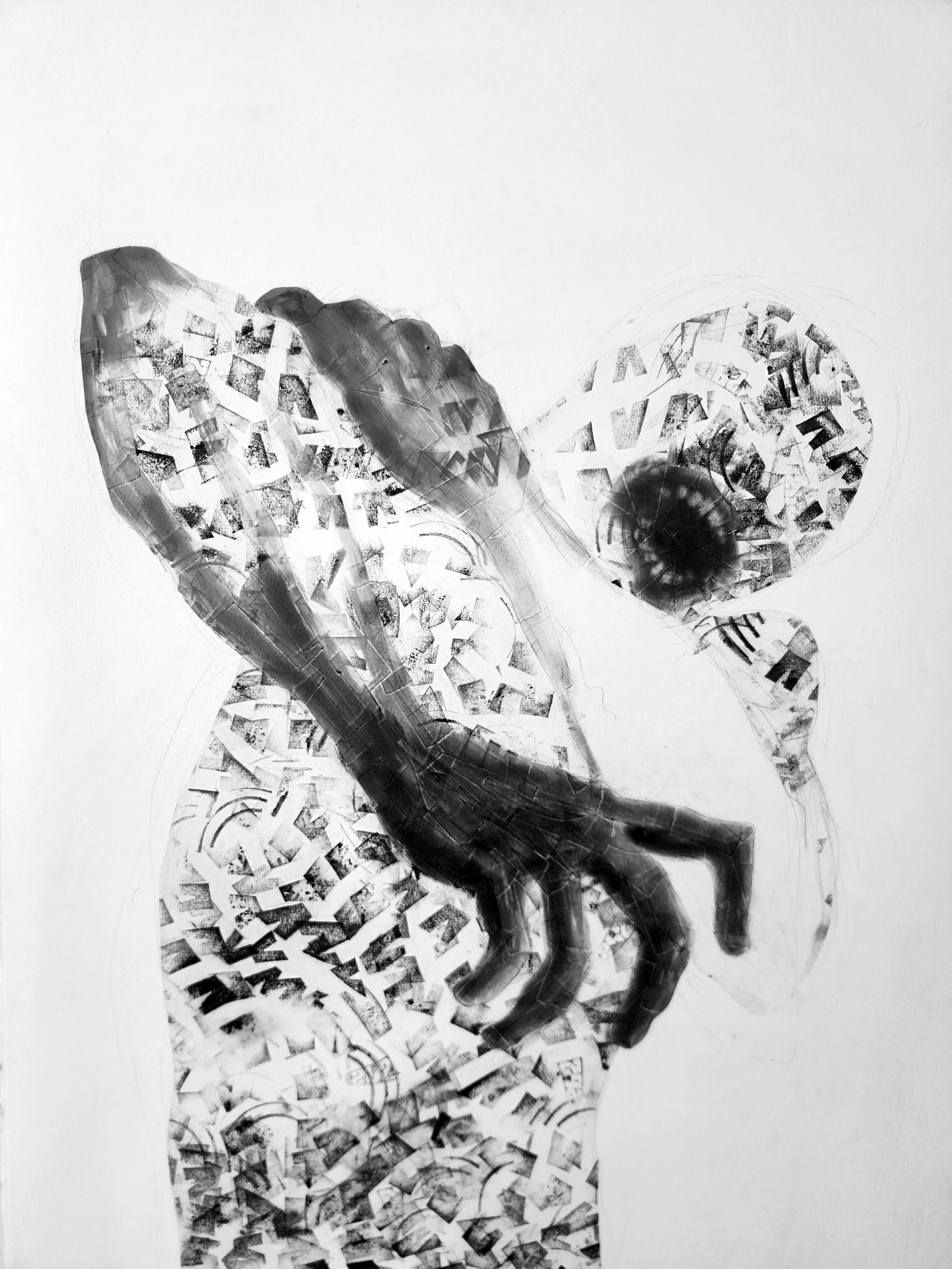
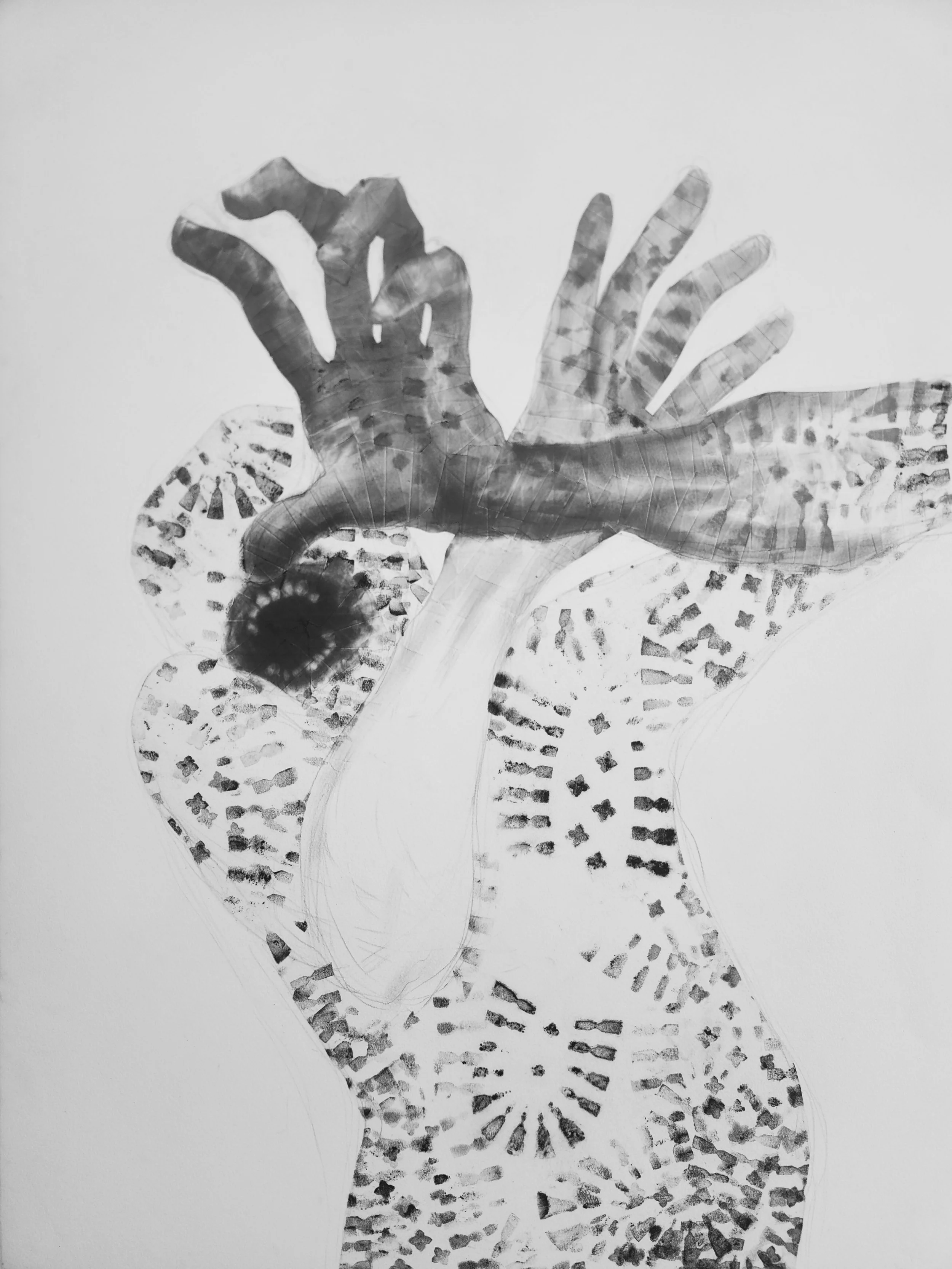
À l’inverse, « Sous la botte » engage le corps dans un rapport direct, physique et contraignant au processus de création. Les dessins sont réalisés au sol, piétinés avec des bottes enduites de poudre de graphite. Ici, la matière n’est plus déposée avec précaution : elle est écrasée, dispersée, déplacée sous le poids du corps. Le dessin émerge d’un geste répétitif, appuyé, presque violent, où la pression exercée devient un élément constitutif de l’image.
L’introduction du ruban adhésif, utilisé pour construire les mains et les bouches, renforce cette tension. Matériau ordinaire, associé à la fixation, il devient ici signe d’entrave et de contrainte. Les bouches ouvertes, parfois réduites au silence, les mains figées ou entravées, traduisent une lutte interne. Les corps semblent pris dans un mouvement de résistance, tentant d’échapper à la force qui les maintient symboliquement et littéralement « sous la botte ».
Le graphite et le ruban adhésif, dans leur matérialité même, incarnent ces dynamiques opposées. La poudre, instable et volatile, peut être caressée ou brutalement dispersée ; le ruban, à la fois outil de construction et de contrainte, fixe autant qu’il limite. Dans les deux séries, les matériaux ne sont pas neutres : ils prolongent et incarnent les gestes, les intentions et les tensions à l’œuvre.
Ainsi, « Sous la botte » et « Sous la soie » ne s’opposent pas simplement : elles se répondent. L’une propose un espace de relâchement, d’abandon et de douceur, tandis que l’autre met en scène la domination, la résistance et l’impact de la violence. Ensemble, elles dessinent un continuum d’expériences corporelles, où le corps devient à la fois surface sensible, lieu d’inscription et terrain de forces contradictoires.
ENG.-
The series “Under the Boot” and “Under the Silk” are structured as two poles of the same exploration of the body, considered both as a space of vulnerability and as a site of tension, constraint, and resistance. Together, they create a dialogue between opposing states—gentleness and violence, surrender and oppression—while questioning how these forces are inscribed in the very materiality of the drawing.
In “Under the Silk,” the gesture is slow, attentive, almost imperceptible. Created with graphite powder applied using an extremely soft makeup brush, the drawings explore a tactile and delicate approach to the surface. The graphite is deposited in thin layers, creating subtle transitions between shadow and light. The areas of the body depicted—back, neck, sides—evoke a silent vulnerability. The absence of faces and hands, as well as the genderless nature of the bodies, suspends any narrative and opens a space for projection, where the gaze becomes almost a form of touch.
Conversely, “Under the Boot” engages the body in a direct, physical, and constraining relationship with the creative process. The drawings are made on the floor, trampled with boots coated in graphite powder. Here, the material is no longer carefully applied: it is crushed, dispersed, displaced under the weight of the body. The drawing emerges from a repetitive, forceful, almost violent gesture, where the pressure exerted becomes a constitutive element of the image.
The introduction of adhesive tape, used to construct the hands and mouths, reinforces this tension. An ordinary material, associated with fixation, it here becomes a sign of hindrance and constraint. The open mouths, sometimes silenced, the frozen or bound hands, convey an internal struggle. The bodies seem caught in a movement of resistance, attempting to escape the force that symbolically and literally keeps them “under the boot.”
Graphite and adhesive tape, in their very materiality, embody these opposing dynamics. The powder, unstable and volatile, can be caressed or brutally dispersed; the tape, simultaneously a tool of construction and constraint, fixes as much as it limits. In both series, the materials are not neutral: they extend and embody the gestures, intentions, and tensions at play.
Thus, “Under the Boot” and “Under the Silk” are not simply opposed: they respond to each other. One offers a space of release, surrender, and gentleness, while the other stages domination, resistance, and the impact of violence. Together, they trace a continuum of bodily experiences, where the body becomes simultaneously a sensitive surface, a site of inscription, and a terrain of contradictory forces.